


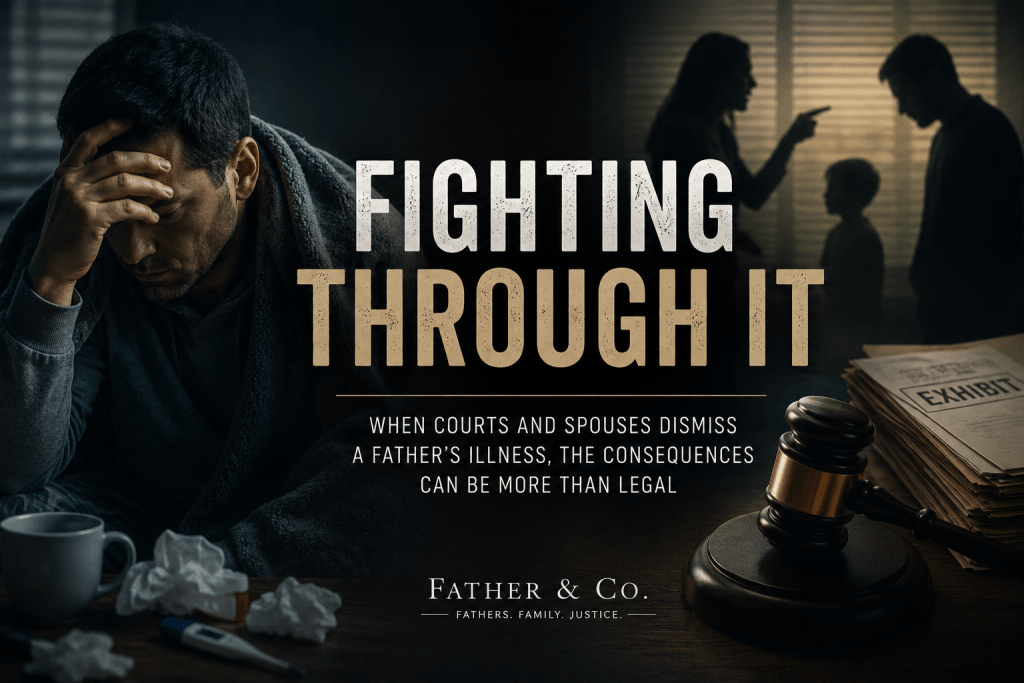
When courts and spouses dismiss a father’s illness, the consequences can be more than legal
Michael Phillips | Father & Co.
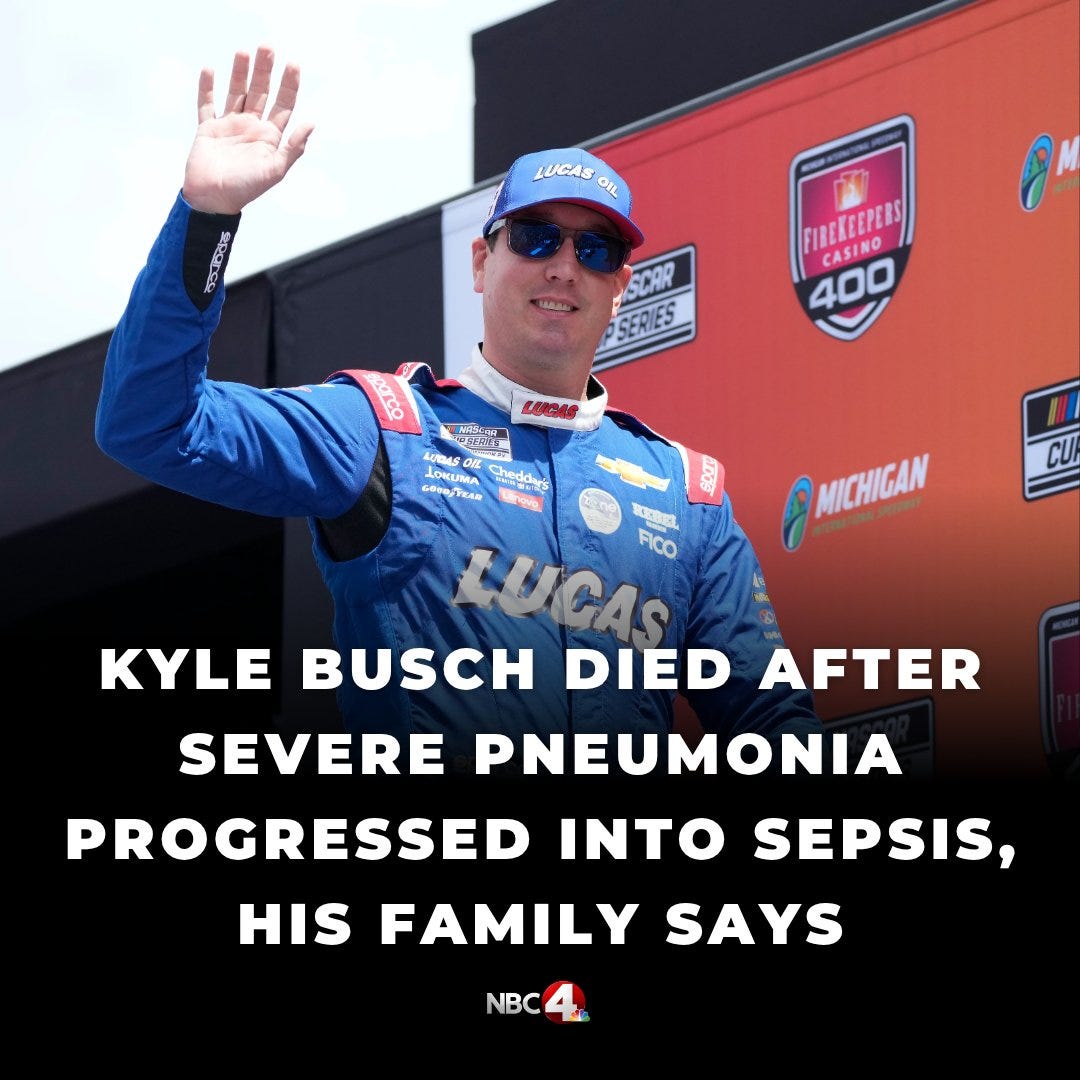
Kyle Busch died Thursday. He was 41. His family confirmed Saturday that severe pneumonia had progressed into sepsis, causing what they described as rapid and overwhelming complications. Earlier that week, he had been racing. Days before that, he was at a karting facility in Durham. He likely knew something was wrong and pressed on anyway. That’s what you do when the culture around you rewards pushing through pain, when stopping feels like weakness, when everyone is watching.
He probably thought he could fight through it.
That phrase — fighting through it — carries different weight depending on who’s doing the fighting and what they’re fighting against. For a professional athlete, it means competing while sick. For a father navigating a high-conflict separation, it can mean something more complicated: trying to function, trying to parent, trying to appear credible, while being actively denied the conditions necessary to recover.
In November 2019, I went to a CVS MinuteClinic. I had been sick for more than a week, getting worse rather than better. The clinic confirmed what I had suspected: I had a virus showing signs of pneumonia. I texted my then-wife, Christina Avgerinos, that same day to tell her. She asked what my “current condition” was. I told her: virus, showing signs of pneumonia, given medication.
When symptoms didn’t improve, she later told me I was faking it.
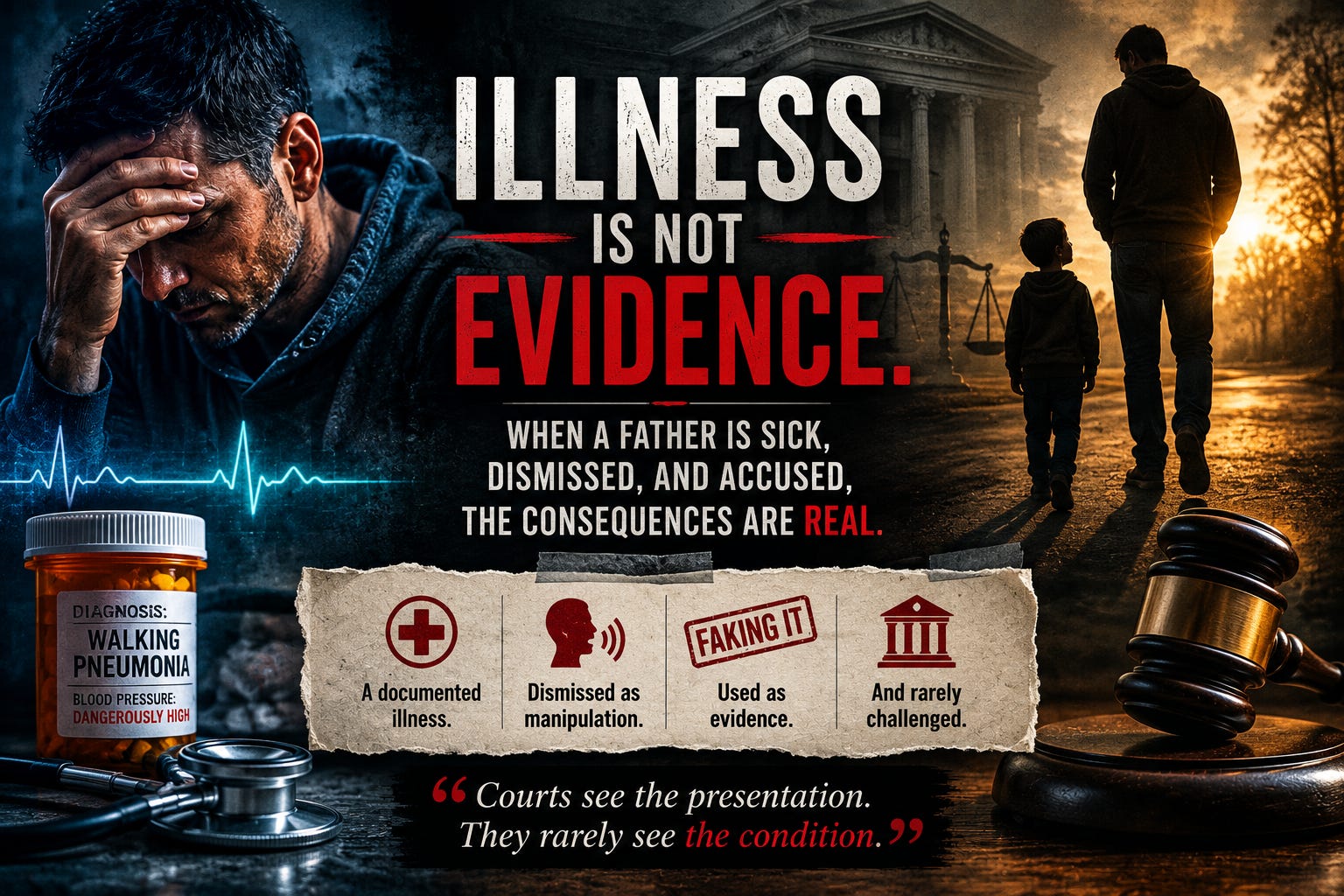
That wasn’t a passing remark. It became a sustained position. Over the weeks that followed — as the illness lingered, as it interrupted my life, as I sought follow-up care, as a physician at a North Bethesda practice in December formally diagnosed me with walking pneumonia and flagged that my blood pressure had climbed to dangerous levels — Christina Avgerinos continued to accuse me of faking my illness and acting lazy. The diagnosis, the medication, the doctor’s explicit concern about my blood pressure: none of it registered as evidence of anything other than manipulation, or an inconvenience to her.
The documentation of this pattern exists in court filings in Avgerinos v. Phillips, Case No. 168564-FL, Montgomery County. The timeline notes that she “still accuses Defendant of faking being sick and acting lazy” following a formal diagnosis. My own communications from that period record symptoms including dizziness, fatigue, difficulty sleeping, persistent coughing, loss of my voice, and elevated blood pressure — and they record her response to those symptoms, which was to call them performance.
I could not rest. I was sleeping poorly, navigating a failing marriage, fighting for time with my son, soon being thrust into divorce proceedings, and managing a respiratory illness that had reached my lungs and elevated my blood pressure to levels my doctor described as a genuine concern. When I told my doctor that my blood pressure was high, I also told her why: “Thanks to Tina with her constant threats to leave.” The response from my mother, whom I relayed this to, was simple: “Having high blood pressure is real scary.”
Walking pneumonia can kill you. Not often, and not usually, but it can — particularly when it goes untreated, when the patient cannot rest, when stress keeps the body in a state that impairs recovery. What Kyle Busch’s death illustrates is that pneumonia doesn’t announce itself as fatal. It presents as something manageable, something you can push through. Until it isn’t.
The question this publication is interested in isn’t whether Christina Avgerinos should have been a more compassionate spouse — that’s a matter between two people, and it’s in the past. The question is what happens when this kind of dismissal enters a legal proceeding.
In the months that followed my illness, Christina Avgerinos used the period of my sickness as evidence of the very character defects she claimed justified restricting my access to my son. I was said to be rageful. Drunk. Unstable. The court record documents her pattern of false accusations during this period in detail. What it does not sufficiently reckon with — and what courts in contested custody matters rarely reckon with — is what untreated illness does to a person’s presentation, their affect, their capacity to perform stability on demand.
A man with walking pneumonia who hasn’t slept properly, whose blood pressure is dangerously elevated, who is being screamed at and called a liar on a daily basis, while running a fever, does not present as his best self. Alcohol? I knew drinking could exacerbate the symptoms, and it is well-documented that I mostly avoided it. But still — they listened to her over me and what was actually documented. Courts evaluate fathers on their presentation. Evaluators look for composure, responsiveness, and affect. None of those assessments are calibrated to account for someone managing a documented respiratory illness under sustained psychological pressure — particularly when the opposing party has successfully framed the illness itself as a fabrication and self-destruction.
The formal record notes that Christina Avgerinos “accused the Defendant of faking having pneumonia and symptoms that lasted between November 2019 to February 2020, despite a diagnosis by his doctor.” That accusation did not stay between us. It shaped a narrative that followed me into proceedings where I had no adequate opportunity to rebut it with the weight it deserved.
This is a pattern, not an anomaly. Fathers, and mothers, in high-conflict custody cases, routinely have their physical and mental health weaponized against them — first by a partner who dismisses legitimate illness as performance, then by a legal system that never pauses to ask what the person might have been managing when the alleged instability occurred. The illness becomes invisible. The presentation during illness becomes evidence. The circle closes.
Kyle Busch died because he fought through it. That’s the story his sport will tell, and there’s something true in it — he was, by every account, a competitor who did not yield easily to anything.
But fighting through it isn’t always a virtue. Sometimes it’s what you do when you have no choice. When stopping isn’t an option because someone has decided that stopping is evidence of the thing they’ve already decided you are.
I survived my walking pneumonia. I didn’t know at the time how serious it could become. I know now. The record exists. The diagnosis exists. The documented accusations of faking exist alongside it.
That’s the thing about a record: it doesn’t fight through anything. It just sits there, waiting to be read.
Case filings referenced in this article are part of the public record in Avgerinos v. Phillips, Case No. 168564-FL, Montgomery County Circuit Court.

Need help reviewing or organizing court or formal documents?
Father & Co. offers non-legal document review and organization for people representing themselves. This includes clarity, structure, neutral tone, and timeline organization — not legal advice or representation.
Have a story, experience, or resource to share?
Submissions are reviewed with care and discretion. We respect privacy and handle sensitive information responsibly.